
182 basketball drills, free to read
Shooting, ball handling, finishing, defense, passing, IQ, and conditioning — filterable by skill, with age group, duration, and equipment for every drill. Build these into a full practice plan free in the app.
free
Every drill here lists the skill it develops, how long to run it, the age bands it suits, an intensity rating, and the equipment you need — enough to slot it into a session and know what it's for. 20 of them also have a full breakdown: setup, numbered steps, the coaching points that matter while it's running, the mistakes players actually make, and how to scale it up or down. We're working through the rest.
If you're building a session from scratch, work backwards from the skill you want to move rather than picking drills you like. Pick one primary skill per practice, give it the longest block while players are fresh, then layer in the secondary work. Competitive and conditioning drills belong at the end — they raise intensity but they also degrade technique, so anything you're trying to teach should come first.
The counts below are live. Filter by skill area, or start from a ready-made practice plan if you'd rather not sequence it yourself. For the reasoning behind how a session is put together, see how to build a basketball practice plan.
Drills by skill area
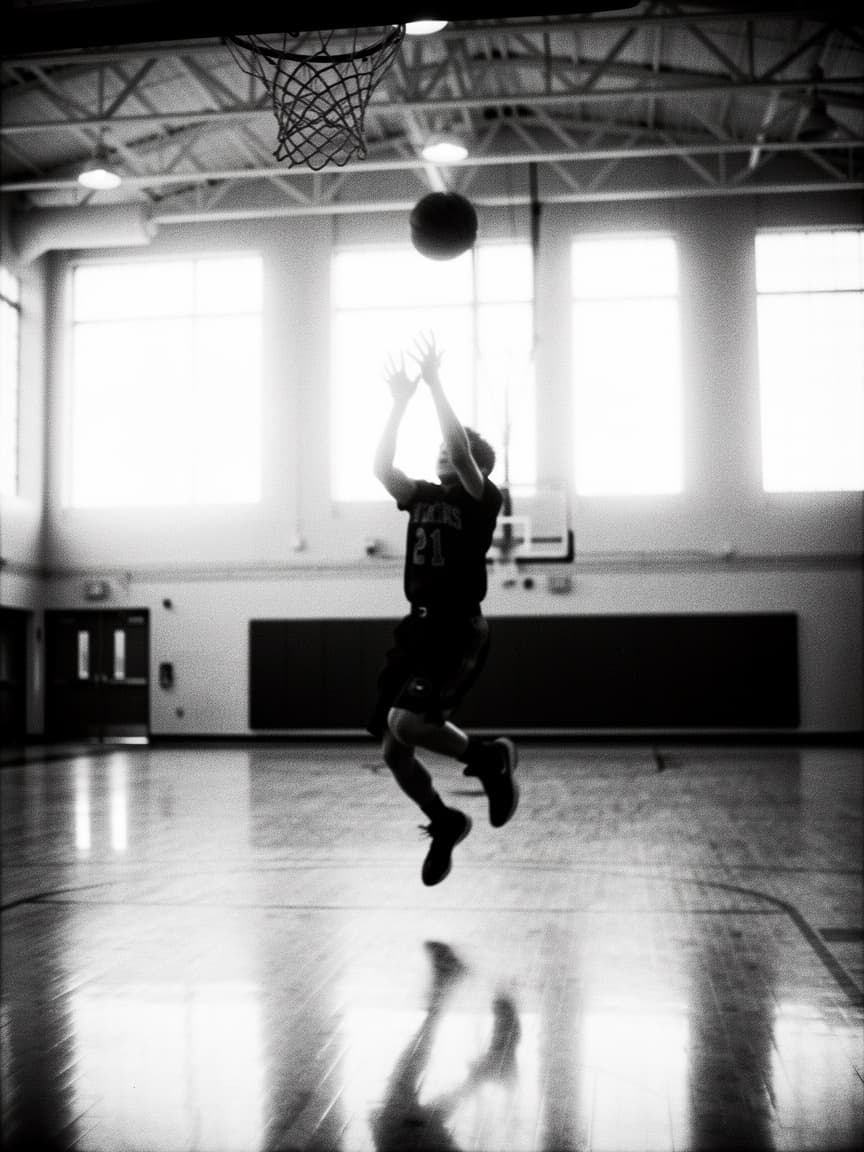
Shooting drills build a repeatable release through high-rep, low-distraction reps before adding movement, defense, and game speed. Track makes, not just attempts, and keep form the priority until it's automatic.
Ball-handling work develops control at increasing speed and pressure — stationary control first, then movement, then live reads against a defender. Both hands, every time.
Finishing drills train footwork, touch, and body control through contact near the basket. Reps with both hands and both feet build the habit of finishing strong regardless of angle.
Individual defense is built on stance, footwork, and effort before scheme. Drill the fundamentals — stance, slides, closeouts — until they hold up at full speed and under fatigue.
Basketball conditioning should mirror the stop-start demands of the game — short, intense bursts with real recovery, not steady-state cardio. Tie conditioning to competitive targets whenever you can.
IQ and decision-making drills put players in live, small-sided situations where they have to read a defender and choose correctly — the muscle memory of good decisions, not just good mechanics.
Passing drills build accuracy, timing, and footwork on the catch. The best passing work is done on the move, since that's how the ball actually gets delivered in a game.
Footwork is the foundation under every other skill — pivots, jump stops, and change-of-direction work should be drilled on their own before they're asked to hold up inside a live move.
Rebounding is won with positioning and effort before jumping ability — teach the box-out first, then the pursuit of the ball, then the outlet. All three, every rep.
Team offense drills build spacing, timing, and decision-making between multiple players — the goal is a correct read repeated until it's automatic, not just running a set.
Shooting drills build a repeatable release through high-rep, low-distraction reps before adding movement, defense, and game speed. Track makes, not just attempts, and keep form the priority until it's automatic.
Form Shooting Ladder
One-hand form shots starting under the rim, stepping back one foot after five makes. Builds a repeatable release.
5-Spot Catch & Shoot
Game-speed catch-and-shoot from five perimeter spots. Track makes out of 10 at each.
Curl / Fade Footwork
Come off a screen into curl and fade actions, squaring in the air. Reads the closeout.
Beat-the-Pro (Make 21)
Race to 21 vs. a virtual pro — makes worth 2, misses give the pro 3. Pressure reps.
Pull-Up off 1 Dribble
Attack, plant, and rise into a balanced pull-up both directions. Chin the ball on the gather.
Late-Clock Isolation Package
Score from a standstill in 6 seconds — footwork, counters, and shot creation.
Perfect Practice FTs
Shoot fatigued free throws in pairs — miss and the team runs. Pressure + routine.
Floater Range Progression
Attack from the foul line off two dribbles and finish with a one-foot floater before the defender's arrival, moving one step back after every three makes. Extends touch and arc beyond standard layup range.
One-Dribble Pull-Up (Both Sides)
Catch on the wing, take a hard one-dribble attack left then right, rising into a balanced pull-up jumper each direction. Trains the same shot pocket regardless of which hand dribbles.
Moving Catch-and-Shoot
Shooter jogs along the three-point line and catches a pass in stride, squaring feet before the ball arrives to shoot without a gather step. Builds the footwork for shooting off relocation rather than standing still.
Sprint-to-Free-Throw
Run a full-court sprint immediately before stepping to the line to shoot free throws, simulating late-game fatigue. Reinforces routine and breathing under a raised heart rate.
One-Foot Balance Shooting
Shoot from three feet out while balancing on one foot through the catch, hold, and release. Forces balance and a controlled motion before adding footwork.
Elbow-to-Elbow Spot Shooting
Catch and shoot from both elbows, five makes each side before rotating out. Focus on squaring the feet before the catch, not after.
Free Throw Routine Reps
Shoot free throws using the exact same pre-shot routine every time - breathe, spot, release. Track makes out of ten to build pressure awareness early.
One-Hand Form Flick
Close-range one-hand shooting with the guide hand tucked behind the back, isolating wrist snap and follow-through on every rep.
BEEF Checkpoint Shooting
Partner checks Balance-Eyes-Elbow-Follow-through on each rep and freezes the shooter at release to correct form before the next shot.
Wall Push Shooting
Shoot into a wall or net from three feet away with no rim to chase, isolating arm path and wrist snap on the release.
Chair-to-Stand Shooting
Start seated in a chair facing the rim, stand up into the shot to build a strong leg drive and repeatable base on every rep.
Guide Hand Lock Shooting
Strap the guide hand to the ball with a towel so it can't thumb the release, grooving a clean one-hand finish on every shot.
Catch-and-Shoot off Baseline Drift
Drift along the baseline away from the passer, square up in the air on the catch, and rise into the shot without extra gather steps.
Catch-and-Shoot off V-Cut
Sharp V-cut away from the ball then explode back to the pass, catching in shooting rhythm and getting the shot off in one motion.
Catch-and-Shoot off Flare Screen
Use a flare screen to separate from the defender, catch on the move facing the rim, and shoot with no dribble.
Catch-and-Shoot off Pindown
Read the pindown screen, curling if the defender trails or popping if they cut underneath, then catch and shoot in rhythm.
Skip-Pass Catch-and-Shoot
Receive a one-motion skip pass from the opposite wing and get the shot off before the closeout defender arrives.
Hesitation Pull-Up
One hard dribble into a hesitation that sells the drive, then rise into a balanced pull-up jumper off the next dribble.
Snake Dribble Three-Level Pull-Up
Snake dribble through a line of cones changing direction at each one, then pull up at the rim, mid-range, or three on the coach's call.
Step-Back Jumper Series
One dribble into a hard step-back to create separation from the defender before rising into the shot, both directions.
Shot Fake, One Dribble, Pull-Up
Shot fake to get the closeout airborne, then take one hard dribble into a pull-up jumper before the defender can recover.
In-and-Out Dribble Pull-Up
In-and-out dribble move to freeze the on-ball defender, then rise into a jumper off one more hard dribble.
Combo Attack to Stepback Three
String a crossover into a hesitation, then a hard stepback beyond the three-point line for a game-pace contested jumper.
Baseline-to-Wing Sprint Shot
Sprint from the baseline to the wing, catch the pass in stride, and shoot without breaking stride or resetting your feet.
Pass-and-Relocate Shot
Pass to a teammate then relocate to open space; catch the return pass in rhythm and shoot without hesitation.
Elevator Doors Shooting
Cut through two staggered screens that close behind the cutter, catching in the gap and shooting before the door reopens.
Range Extension Ladder
Make a shot from each spot before stepping back one giant stride, progressing from short mid-range out past the three-point line.
Deep Range Countdown
Count down from ten makes at a spot two feet beyond the three-point line, resetting the count to ten on any miss.
Corner-to-Corner Range Run
Shoot from corner to wing to top to wing to corner, extending one step further from the rim on the return trip across.
Showing 1–36 of 42 shooting drills
All 182 drills
Every drill in the library, A–Z.